
daveo4EV
Well-Known Member
- First Name
- David
- Joined
- Jan 28, 2019
- Threads
- 59
- Messages
- 1,982
- Reaction score
- 1,258
- Location
- Santa Cruz
- Vehicles
- Cayenne Hybrid, 911(s) GT3/Convertable

- Thread starter
- #1
this is my $0.02 YMMV
tldr; save more than $11k (option price, tax, registration fees) on your Cayenne EV build by not optioning brakes that will only be used 3% of the time - Porsche's own data/claims.
![Porsche Cayenne EV [Opinion/PSA] - you don't need or benefit from PCCB's on an EV w/excellent regeneration… Screenshot 2026-07-24 at 2.36.06 PM](data:image/svg+xml;charset=utf-8,%3Csvg xmlns%3D'http%3A%2F%2Fwww.w3.org%2F2000%2Fsvg' width='1224' height='926' viewBox%3D'0 0 1224 926'%2F%3E)
details below…
We all know Porsche _LOVES_ their options list and increased margins associated with these mostly excellent choices options. One of Porsche's stand out options for over a decade has been the option to add world class ceramic brakes to their vehicle's - which by any measure are the best brakes mass production money can buy. Now PCCB's have pro's and con's, but at this point in time they are a well sorted choice and the Pro's/Con's are well understood for the well informed buyer.
This option is also one of the most expensive factory options you can add to any Porsche vehicle…
I've been a Porsche victim since my first 2008 911 4S - and have purchased and optioned many many different models of Porsche's - normally PCCB's are a deep-heavy-sigh but yeah go ahead and check the box…because they are in fact the best brakes you can option, and the factory option is the cheapest method to obtain these outstanding and high quality brakes.
however we are no longer in the same space as we are with Porsche's high quality ICE vehicle's - and there is a new techology all these fancy EV's come with.
Regenerative braking by Porsche's own admission handles 97% of your Cayenne's normal use and therefore the friction brakes are far far less used on any decent EV…3% or less of the time by Porsche's own data and claims!
PCCB's 3 main super powers over Porsche's excellent cast-iron metal brakes are:
I believe this is an excellent place to save money on a Porsche build for an EV…and will never be missed…and you also avoid the cost of repair/replacement should that come up for some reason (PCCB's are with out a doubt deeply expensive to replace/repair should it be required) - it can easily and nominally run more than $30k to repair/replace all 4 PCCB's rotors on any of Porsche's PCCB vehicle's. PCCB's are not fragile, but they are less resilient to certain types of road hazards than normal cast-iron brake rotors and should them become damaged or compromised they are simply expensive to replace. They may in fact be a terrible choice for an SUV that actually will used used on gravel/dirt/poorly-maintined roads…it's worth considering where/how you intend to using your Cayenne EV before checking the PCCB box.
in fact regeneration is so effective one of the most challenging hill decents in the world (pikes peak) - the Audi eTron's brakes rotor's were thermally measured to be at ambient air temps at the 1/2 way mandatory ranger check point when they were testing it…
if you want a testimonial about how little friction brakes are used on an EV look no further than the eTron testing data from pikes peak in 2018…
https://www.cnet.com/home/electric-v...-braking-test/
Also; since 2018 manufacturers have been improving and increasing regeneration capabilities such that regeneration is even better than it was in 2018 models and therefore more effective using the friction brakes even less than in the past.
my $0.02 YMMV - but you can save more than $11k on your Cayenne build (plus registration and sales tax on the $11k) by skipping this option on an EV build…
food for thought - you simple don't need or really benefit from PCCB's on a high-regeneration modern EV - they are of dubious benefit and quite expensive in the grand scheme of things…
I still option PCCB' s on current and future ICE Porsche's - but until I can run a Porsche EV on track at/near full pace for more than 45 min straight - PCCB"s are not part of any my future Porsche EV builds - it is simply money better used for other options or outright savings…
tldr; save more than $11k (option price, tax, registration fees) on your Cayenne EV build by not optioning brakes that will only be used 3% of the time - Porsche's own data/claims.
details below…
We all know Porsche _LOVES_ their options list and increased margins associated with these mostly excellent choices options. One of Porsche's stand out options for over a decade has been the option to add world class ceramic brakes to their vehicle's - which by any measure are the best brakes mass production money can buy. Now PCCB's have pro's and con's, but at this point in time they are a well sorted choice and the Pro's/Con's are well understood for the well informed buyer.
This option is also one of the most expensive factory options you can add to any Porsche vehicle…
I've been a Porsche victim since my first 2008 911 4S - and have purchased and optioned many many different models of Porsche's - normally PCCB's are a deep-heavy-sigh but yeah go ahead and check the box…because they are in fact the best brakes you can option, and the factory option is the cheapest method to obtain these outstanding and high quality brakes.
however we are no longer in the same space as we are with Porsche's high quality ICE vehicle's - and there is a new techology all these fancy EV's come with.
Regenerative braking by Porsche's own admission handles 97% of your Cayenne's normal use and therefore the friction brakes are far far less used on any decent EV…3% or less of the time by Porsche's own data and claims!
The Porsche Cayenne Electric handles energy recovery through an advanced regenerative braking system, capturing up to 600 kW of power and managing about 97 percent of everyday stops without physical brakes. Porsche does not use a one-pedal driving mode; instead, it relies on blended braking where pressing the physical brake pedal engages the electric motors for deceleration before seamlessly adding friction brakes. [1, 2, 3, 4, 5]
How Recuperation Works
Adjusting Settings
- Blended Pedal Operation: Lifting off the accelerator provides light deceleration or coasting depending on settings, while pushing the brake pedal activates motor regeneration first. [1, 2]
- Formula E Tech: Direct oil cooling on high-end motors allows the system to harvest massive amounts of energy safely without overheating internal components. [1, 2]
- Reduced Wear: Mechanical brake pads see very little use, meaning they experience minimal wear over the vehicle's lifespan. [1, 2]
Would you like to know more about the charging speeds, battery capacity, or driving range of the Cayenne Electric?
- PCM Menu: Navigate to the car menu, select drive, and tap the recuperation icon to toggle overrun settings.
- Steering Wheel: Program the customizable steering wheel button (joker key) for quick on/off toggling of overrun recuperation. [1]
this difference between ICE vehicle's and EV's can give us pause to reconsider the value proposition of PCCB's on a vehicle that rarely if ever actually uses the friction brakes!!!https://spectrum.ieee.org/porsche-cayenne-electric
For most drivers, those friction brakes won’t get much use, though:
The Cayenne makes about 97 percent of its stops in typical driving using regenerative brakes alone, Porsche says. Those regenerative stops return up to 98 percent of available kinetic energy to the onboard battery, nearly matching the company’s Formula E racers for efficiency.
PCCB's 3 main super powers over Porsche's excellent cast-iron metal brakes are:
- lower weight
- lower dust emissions for cleaner wheels
- thermal endurance under heavy use (never fade)
- weight always matters - but I'll argue on a 6,000 lbs vehicle - you've already lost - so this $11k+ option isn't going to be that much a "win"
- low dust - still true, but doesn't matter if the friction brakes are never/rarely used
- on an EV with excellent regeneration friction brakes are rarely used and wear even less - no dust if there is no actual wear…
- thermal endurance - this one is counter intutitive - but again - regeneration means the friction brakes are not used and therefore do not thermally "heat up" in nearly any scenario for normal driving
- where you would need thermal endurance is for track or very very spirited driving over long periods of time - but even in that case because of consumption and other limitations you run out of "capacity" in other components (battery thermals and actual total capacity) of an EV before you're going to thermally saturate the friction brakes…
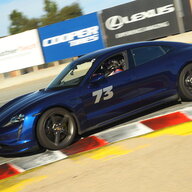
- based my actual track experience with my 2020 Taycan Turbo - you simply can not drive an EV hard enough and/or long enough to need high-endurance brakes…you can't be on track long enough to "need" high endurance brakes
I believe this is an excellent place to save money on a Porsche build for an EV…and will never be missed…and you also avoid the cost of repair/replacement should that come up for some reason (PCCB's are with out a doubt deeply expensive to replace/repair should it be required) - it can easily and nominally run more than $30k to repair/replace all 4 PCCB's rotors on any of Porsche's PCCB vehicle's. PCCB's are not fragile, but they are less resilient to certain types of road hazards than normal cast-iron brake rotors and should them become damaged or compromised they are simply expensive to replace. They may in fact be a terrible choice for an SUV that actually will used used on gravel/dirt/poorly-maintined roads…it's worth considering where/how you intend to using your Cayenne EV before checking the PCCB box.
in fact regeneration is so effective one of the most challenging hill decents in the world (pikes peak) - the Audi eTron's brakes rotor's were thermally measured to be at ambient air temps at the 1/2 way mandatory ranger check point when they were testing it…
if you want a testimonial about how little friction brakes are used on an EV look no further than the eTron testing data from pikes peak in 2018…
https://www.cnet.com/home/electric-v...-braking-test/
I see no reason to upgrade the brakes on an EV w/regernation above and beyond Porsche's _EXCELLENT_ cast-iron "standard" brakes - even Porsche's non-PCCB brakes are considered excellent by most any standard…so this are of the vehicle is not a place to dump options money.“Do you want to touch the brake disc?” As far as questions go at an automotive press launch, this was a first for me. Dr. Michael Wein, the manager responsible for the new regenerative braking system on Audi’s E-tron electric SUV, leaned in and said, “Go ahead.” I admit, the thought hadn’t exactly occurred to me. Mere moments ago, we had descended from the 14,000-foot summit of Colorado’s Pikes Peak, pausing part of the way down, at historic Glen Cove Inn (altitude: 11,500 feet), for a mandatory park ranger brake check.
The ranger dutifully popped out of his little wooden guard shack with a pistol-grip infrared thermometer, pointed the barrel at our car’s front disc, and crisply announced, “forty-seven-point-nine degrees.”
At that point, we had only descended around 2,500 feet, but by then, the ranger assured me, most car brakes are sitting at an easy 150 degrees Fahrenheit, and some are a good deal hotter, with a small percentage already overheated at 500 or worse (at which point they’re typically billowing smoke and our park ranger friend orders to pull over and cool).
Our Audi E-tron prototype’s discs, by contrast, were sitting just a few degrees above ambient temperature. I know, because I dutifully put my hand directly on the disc on and checked, to Dr. Wein’s visible satisfaction.
A steep 2,500-foot descent, and we had barely had occasion to graze the discs.
Also; since 2018 manufacturers have been improving and increasing regeneration capabilities such that regeneration is even better than it was in 2018 models and therefore more effective using the friction brakes even less than in the past.
my $0.02 YMMV - but you can save more than $11k on your Cayenne build (plus registration and sales tax on the $11k) by skipping this option on an EV build…
food for thought - you simple don't need or really benefit from PCCB's on a high-regeneration modern EV - they are of dubious benefit and quite expensive in the grand scheme of things…
I still option PCCB' s on current and future ICE Porsche's - but until I can run a Porsche EV on track at/near full pace for more than 45 min straight - PCCB"s are not part of any my future Porsche EV builds - it is simply money better used for other options or outright savings…
Last edited:
![Porsche Cayenne EV [Opinion/PSA] - you don't need or benefit from PCCB's on an EV w/excellent regeneration… Screenshot 2026-09-05 at 7.54.24 AM](data:image/svg+xml;charset=utf-8,%3Csvg xmlns%3D'http%3A%2F%2Fwww.w3.org%2F2000%2Fsvg' width='1358' height='926' viewBox%3D'0 0 1358 926'%2F%3E)
![Porsche Cayenne EV [Opinion/PSA] - you don't need or benefit from PCCB's on an EV w/excellent regeneration… IMG_3665](data:image/svg+xml;charset=utf-8,%3Csvg xmlns%3D'http%3A%2F%2Fwww.w3.org%2F2000%2Fsvg' width='1733' height='1300' viewBox%3D'0 0 1733 1300'%2F%3E)
![Porsche Cayenne EV [Opinion/PSA] - you don't need or benefit from PCCB's on an EV w/excellent regeneration… IMG_3028](data:image/svg+xml;charset=utf-8,%3Csvg xmlns%3D'http%3A%2F%2Fwww.w3.org%2F2000%2Fsvg' width='975' height='1300' viewBox%3D'0 0 975 1300'%2F%3E)

![Porsche Cayenne EV [Opinion/PSA] - you don't need or benefit from PCCB's on an EV w/excellent regeneration… Screenshot 2026-09-05 at 8.22.07 AM](data:image/svg+xml;charset=utf-8,%3Csvg xmlns%3D'http%3A%2F%2Fwww.w3.org%2F2000%2Fsvg' width='1070' height='966' viewBox%3D'0 0 1070 966'%2F%3E)


